

The Hauser Diet®: An Alternative Approach to Healthy Eating!
The Hauser Diet® program is what you would call an “alternative approach” to diet, nutrition, and healthy eating that was developed by our medical doctor and registered dietitian team in the mid 1990’s in an effort to provide a more individualized approach to diet for their patients. Ross and Marion Hauser, founders of Caring Medical Regenerative Medicine Clinics Oak Park, IL, were frustrated with the traditional approach to diet/nutrition – in that the “one-diet-fits-all” approach did not work for all patients and their wide variety of conditions. Spurred on by their patients, they researched and developed what has now become the Hauser Diet®. Much of their work is discussed in the book The Hauser Diet: A Fresh Look at Healthy Living!
With all of the diets available to the public, many people are confused and do not know what to eat. You hear that eggs are bad for you – then you hear that eggs are good for you! Red meat is evil – no wait, a high protein diet with meat is good for you; it’s the carbohydrates that are the enemy! Each person’s view of “healthy” is based on their perceptions and where they get their information.
- The American Heart Association recommends a low cholesterol, low fat, low sodium diet.
- The American Dietetic Association recommends “everything in moderation.”
- The Atkins Diet recommends a high protein, low carbohydrate diet.
- The Ornish Diet recommends a vegetarian diet.
What diet should you follow?
Our answer – it depends on your Hauser Diet® Type.
Each and every one of us has a unique individual physiology requiring different types of food—we each have our own Diet Type!
Did you ever wonder why some people appear to have really fast metabolisms, enabling them to eat everything and never gain weight, where others’ metabolisms are so slow that they eat like birds and never lose weight? The answer lies in the manner in which each person extracts energy from his or her food. Lions, for instance, will get more energy out of protein and fat sources of food than vegetarian sources. Giraffes are the opposite. In other words, a lion will eat meat because the lion is able to obtain more energy from protein (meat) than carbohydrates (fruits, for example).
Thus the lion naturally eats more meat and is what we call a “carnivore” or meat-eater. These and other interesting facts occur because of Individual Diet Type. After years of testing patients’ diet types at Caring Medical we determined that people fit into five categories. Kerri Slivka a nutritionist at Brookfield Zoo in Brookfield, Illinois, helped us determine where these diet breakdowns fit into the animal kingdom:
THE HAUSER DIETS
LION – 60% PROTEIN / 25% FAT / 15% CARBS
OTTER – 50% PROTEIN / 25% FAT / 25% CARBS
BEAR – 50% PROTEIN/FAT & 50% CARBS
MONKEY – 35% PROTEIN/FAT & 65% CARBS
GIRAFFE – 20% PROTEIN/FAT & 80% CARBS
The Bear Diet Type lies in the middle of the spectrum and represents the most balanced diet. The Otter and Lion Diet Types are higher in protein and fat and lower in carbohydrates than the Bear, with the Lion Diet Type being a true carnivorous diet. The Monkey and Giraffe Diet Types are low fat, low protein diets that emphasize whole grains and vegetables, with the Giraffe Diet Type being a true vegetarian diet. Since the ultimate purpose of food is to give the body energy, Hauser Diet® Typing helps people know which foods to eat to give them maximum energy, as well as make them feel their best.
The particular Hauser Diet® prescribed is designed to keep both blood sugars and blood pH within the normal (optimal) range. Stabilizing blood sugars has the effect of better energy throughout the day. By minimizing blood sugar swings, mental faculties such as concentration, attention, mood, emotions, happiness, and overall sense of well being are accentuated. When the blood pH is within normal range the metabolism can work efficiently and the maximum amount of ATP (energy) is produced. ATP is the fuel which gives the body energy and is produced in every cell. If the blood pH drops below 7.364, the blood is said to be acidic and if the blood pH rises above 7.384, the blood is said to be alkaline. In both of these unbalanced states the amount of ATP produced diminishes. When ATP is diminished, energy is diminished. When energy is diminished, health plummets and weight gain occurs, regardless of the amount of calories consumed. It just makes sense to know what foods you should be putting into your body to make it run efficiently. The individualized approach of the Hauser Diet® makes sense!
ASK THE EXPERT
When asked what would happen if an animal were to eat the wrong type of diet, Kerri answers, “For horses (this would apply to captive zoo equids as well), excess starch (grain compared to hay) can decrease the pH of the GI tract, which can lead to gas which can lead to lactate absorption and metabolic acidosis. This can cause colic, diarrhea and laminitis. In domestic cats, high carbohydrate (cereal) diets increase blood glucose and insulin. It can predispose cats to obesity and diabetes. In domestic dogs (and I would apply this to some bear species) high fat diets.”
“Nutrition can also affect reproduction as well. Weight issues for the females can lead to difficulties in getting pregnant, giving birth or laying eggs. In males, if they are too chubby to mount the female, weight is an issue too. Beyond the physical, imbalanced nutrients (low vitamin E, carotenoids, fatty acids, for example) can reduce fertility. Viability of eggs can be affected by any number of nutrients.”
So as you can see, eating the appropriate diet for your diet type can significantly alter your health.
The Hauser Diet is a diet protocol that you can be tested for which particular Hauser Diet Type you are. Then when your health changes, you can get retested to see if your particular needs have changed. So in The Hauser Diet we are saying you can know for sure what diet you need to follow and as long as you feel great! If you stop feeling great, we’ll figure out why and tell you how to adjust it. Today you may be a Lion, tommorrow a Bear, the Hauser Diet adjusts to you!
Diet Typing involves blood tests which determine the best diet for an individual: a Blood pH test, Modified Glucose Tolerance Test, Blood Insulin Levels, Hemoglobin A1c (HgA1c), and an additional test maybe ordered – the Food Allergy Profile.
Modified Glucose Tolerance Test
This test demonstrates how well a person handles carbohydrates. Carbohydrates come from plant sources, including vegetables, fruits, grains, and breads. Eating foods that keep blood sugar stable will maximize energy throughout the day and prevent disease.
In this test a person is asked to fast from food for 10-12 hours before the initial blood draw. After the initial blood draw, the person drinks a serving of fruit juice, which is the simplest form of carbohydrates (sugar). The person’s blood sugar is drawn again, every 30 minutes for 90 minutes, to check the response to the juice. The results are graphed out and compared to the normal range.
When the blood sugar drops too low, the person is said to be a fast oxidizer. This means the person breaks down (oxidizes) food too quickly. The recommended diet for this person needs to contain larger amounts of foods such as proteins and fats that are broken down slowly. This will help keep the person’s blood sugar stable.
In contrast, when the blood sugars stay too high on the Modified Glucose Tolerance Test, the person is a slow oxidizer. Slow oxidizers break down food too slowly so the blood sugars stay too high. The recommended diet for this person needs to contain plant based foods such as whole grains, fruits and vegetables to keep the person’s blood sugar stable, since these foods are broken down the easiest. (See figure 1.)
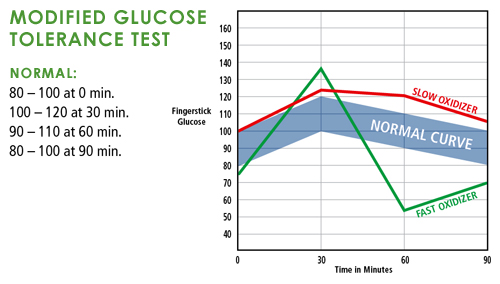
FIGURE 1. The Modified Glucose Tolerance Test demonstrates how well a person handles carbohydrates.
Blood pH
This monitors the acidity and alkalinity of the blood. Normal venous blood pH has a very narrow range. (See figure 1.)
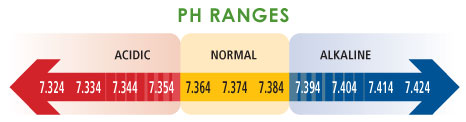
FIGURE 1. For purposes in this page, a venous blood pH below 7.364 is called “acidic” and a venous blood pH greater than 7.384 is called “alkaline.” Normal blood pH is between 7.364 and 7.384.
When the blood pH is within normal range the maximum amount of ATP is produced. ATP is the fuel, produced in every cell, which gives the body energy. If the blood pH drops below 7.364, the blood is said to be acidic and if the blood pH rises above 7.384, the blood is said to be alkaline.
In both states the amount of ATP produced diminishes. When ATP is diminished, energy is diminished. When energy is diminished, health plummets. (See figure 2.)
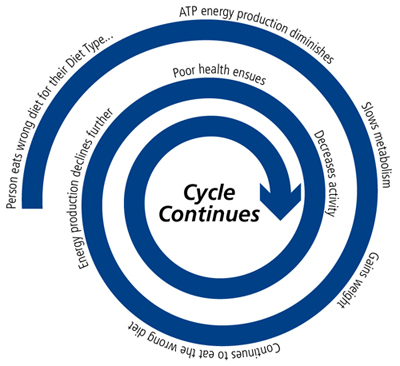
FIGURE 2. Eating the wrong foods for your diet type can cause weight gain, diminished energy, and lead to further health problems.
Never underestimate the power of food
By following the Hauser Diet® program, each person will be provided with an individualized healthy eating plan in order to obtain optimal health, wellness, energy, and appropriate weight. Carbohydrate, fat, and protein are the building blocks of food. All food is made up of different amounts of these macronutrients. The results of your Hauser Diet® laboratory testing with allow us to determine the proper balance of carbohydrate, fat, and protein you should be eating in your diet in order to maximize your health – this is your Diet Type.
